
Methods for Testing Bullion Purity: Bars, Coins, and Doré
25 January 2025
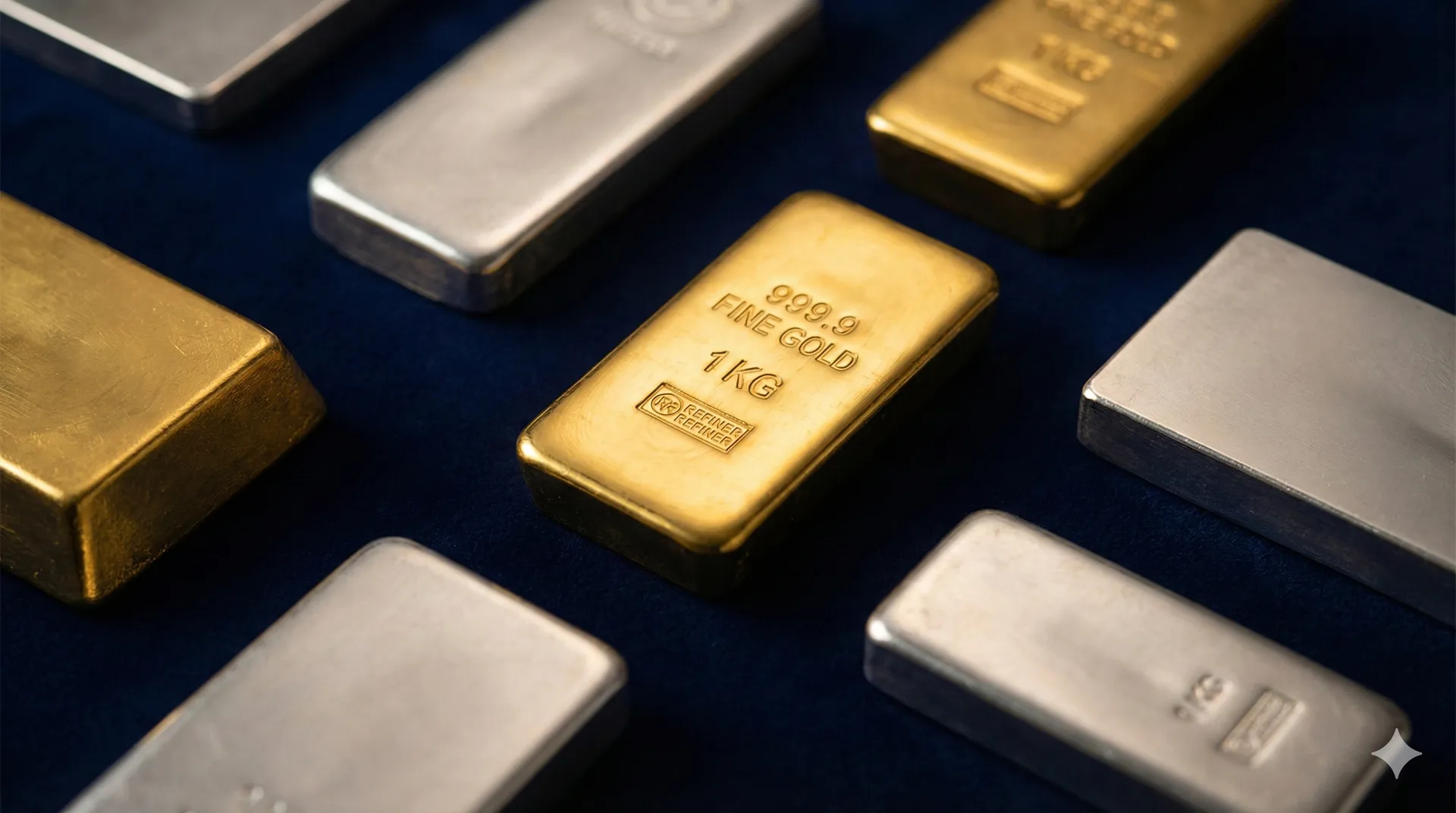
Bullion testing in a hallmarking laboratory follows a different protocol than jewellery testing due to the larger quantities, higher values, and specific requirements of bars, coins, and doré.
XRF Screening
The first step for most bullion testing is XRF screening. The XRF instrument provides a rapid, non-destructive analysis of the surface composition. For investment-grade bars from reputable refiners, this may be sufficient to confirm purity.
Fire Assay for Definitive Results
For doré bars, disputed purity claims, or situations requiring the highest accuracy, fire assay (cupellation) is the definitive method:
- A small sample is precisely weighed and cut from the bar
- The sample is wrapped with lead foil and placed in a cupel
- The cupel is heated to over 1,000°C in a muffle furnace
- Base metals are oxidized and absorbed into the porous cupel
- The remaining precious metal bead is weighed
- The purity is calculated from the weight ratio
Fire assay achieves accuracy to within 0.01% and is the globally accepted referee method for precious metal analysis.
Specific Gravity Testing
As a complementary check, specific gravity testing uses the Archimedes principle to compare the density of the sample against the known density of the pure metal. Significant deviations indicate potential issues with core composition.
Documentation
All bullion testing is documented with detailed assay certificates showing methodology, results, sample identification, and the assayer's credentials.
Continue reading
Explore more articles on hallmarking, testing, and the precious metals industry.